Yoga for Constipation Relief: 6 Poses and Natural Remedies
Constipation is common and usually improves with simple changes. Gentle twists, squatting, warm water, fibre and a regular morning routine may help your bowels find their rhythm again.
Answer 12 quick questions about your body, digestion, sleep and mood. In about two minutes you will know whether you are mostly Vata, Pitta or Kapha, and what suits you.
12 questions · about 2 minutes · free
Your result
Light, quick and creative. Vata types are full of ideas and enthusiasm, but they tire easily and can feel scattered, anxious or cold when out of balance.
Constipation is common and usually improves with simple changes. Gentle twists, squatting, warm water, fibre and a regular morning routine may help your bowels find their rhythm again.
A tight, puffy belly is uncomfortable but usually harmless. These gentle poses, spice remedies and simple habits may help trapped gas move and your digestion settle.
Gentle yoga poses, calming breathwork and Ayurvedic remedies such as tulsi tea and warm oil massage that may help settle stress and anxiety.
A calming evening routine with bedtime yoga, yoga nidra and Ayurvedic rituals like warm nutmeg milk and a foot massage that may help you sleep better.
Six gentle yoga poses, warming Ayurvedic remedies and simple daily habits that may ease lower back pain and stiffness, plus a note on sciatica.
Vata, Pitta and Kapha in plain language: how to spot your natural tendency, what pulls you out of balance, and which yoga poses and habits help bring you back.
Sharp, warm and driven. Pitta types are focused leaders with strong digestion, but they can run hot: impatient, irritable and prone to acidity and inflammation when out of balance.
That burning behind the breastbone is common and often linked to how and when we eat. Calm breathing, gentle poses, cooling spices and smarter meal timing may help.
Why hair falls out, what is normal, and the kitchen remedies, oils, food and calming yoga that help it grow back stronger.
What makes hair turn grey early, what you can and cannot change, and the Ayurvedic foods, oils and natural colours that help.
Gentle neck and shoulder stretches, cooling breathwork and natural remedies like ginger tea and peppermint oil that may ease tension headaches and support migraine care.
Your liver cleans your blood all by itself, every minute of the day. Movement, gentle twists, simple food and less alcohol and sugar are the best ways to support it.
Vata, Pitta and Kapha in plain language: how to spot your natural tendency, what pulls you out of balance, and which yoga poses and habits help bring you back.
Steady, calm and caring. Kapha types are strong, loyal and patient, with lasting energy, but they can become slow, heavy and stuck: weight gain, congestion and low mood when out of balance.
Feeling heavy for hours after a meal and never really hungry? The Ayurvedic idea of agni, a few gentle poses, warming spices and regular meal times may help your digestion wake up again.
Gentle yoga, a short walk after meals and simple food habits that may help keep blood sugar steadier, alongside the care plan you agree with your doctor.
Gentle yoga, calming breathing and sensible food habits that may support your wellbeing with a thyroid condition, alongside proper diagnosis and treatment.
Gentle yoga, breathing and time-tested kitchen remedies that may help your body through a cold or cough and support everyday immunity.
A gentle 10-15 minute morning yoga sequence for complete beginners, with a step-by-step Sun Salutation and simple habits that help you feel awake without coffee jitters.
Vata, Pitta and Kapha in plain language: how to spot your natural tendency, what pulls you out of balance, and which yoga poses and habits help bring you back.
This test is a traditional self-check for learning and fun, not a medical diagnosis. Your answers stay on your device and are never sent to us. For health problems, please see a doctor.
Air and space
Light, quick and creative. Vata types are full of ideas and enthusiasm, but they tire easily and can feel scattered, anxious or cold when out of balance.
Fire and water
Sharp, warm and driven. Pitta types are focused leaders with strong digestion, but they can run hot: impatient, irritable and prone to acidity and inflammation when out of balance.
Earth and water
Steady, calm and caring. Kapha types are strong, loyal and patient, with lasting energy, but they can become slow, heavy and stuck: weight gain, congestion and low mood when out of balance.
Ayurveda describes three doshas, or body energies: Vata (air and space), Pitta (fire and water) and Kapha (earth and water). Everyone has all three, but usually one or two are stronger. This mix is called your prakriti, your natural constitution.
Pick the answer that has been true for most of your life, not just how you feel this week. If two answers fit, choose the one that fits a little better.
In Ayurveda, the three doshas (Vata, Pitta and Kapha) are the energies that shape your body and mind. Everyone has all three, but in different amounts, which is why people react differently to the same food, weather or stress.
Your basic constitution (prakriti) stays the same through life. What changes is your current state (vikriti): stress, seasons, age and food can push any dosha out of balance. That is why it helps to answer for most of your life, not just today.
Most people are a mix. If two doshas score close together, you are a dual type, such as Vata-Pitta or Pitta-Kapha. Follow the advice for the dosha that is out of balance right now, or for the season you are in.
It gives a good first idea. An experienced Ayurvedic doctor also checks your pulse, tongue and history, so their assessment is more precise. Use this test as a starting point, not as a diagnosis.
E-book · PDF
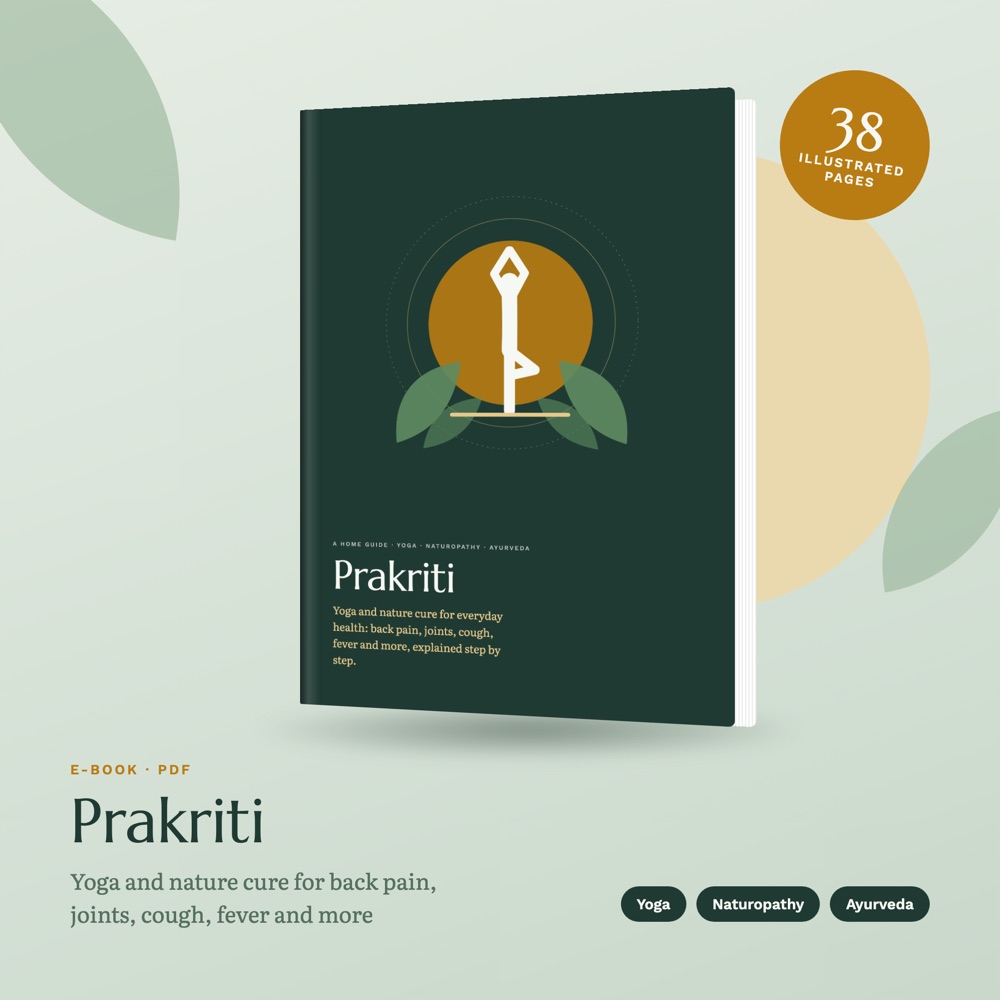
Take the practice further with 38 illustrated pages: step-by-step routines for back pain, joints, cough, fever, acidity, sleep and more, plus home nature-cure therapies and a 21-day plan.
The e-book is written in English.
In India? Pay ₹101 with UPI · Google Pay, PhonePe or QR code